
Corrosion part 4 - Galvanic corrosion
How do I ensure that galvanic corrosion does not affect the life of my structure?
Galvanic Corrosion: Causes, Consequences and Preventive Measures
Galvanic corrosion is a common challenge that should be taken into account, especially in more corrosive environments. Galvanic corrosion occurs when metals with different electrochemical potentials (nobleness) come into contact with each other in, for example, a humid environment, then a corrosion process can occur where the less precious metal (anode) corrodes faster than it would have done on its own, while the nobler metal (cathode) remains protected. This form of corrosion can cause significant material losses and shorten the life of the less precious metal.

Figure 1. Corrosion potentials of various metals in sea water
How does galvanic corrosion occur?
For galvanic corrosion to occur, three main factors are required:
Two metals with different electrochemical potential "A more precious metal acts as a cathode and a less precious metal acts as an anode. Electrical contact between the metals "Direct contact or electrically conductive connections allow electrons to move from the anode to the cathode. Presence of an electrolyte "Usually in the form of moisture, water or a corrosive liquid that enables ion transport between the metals.

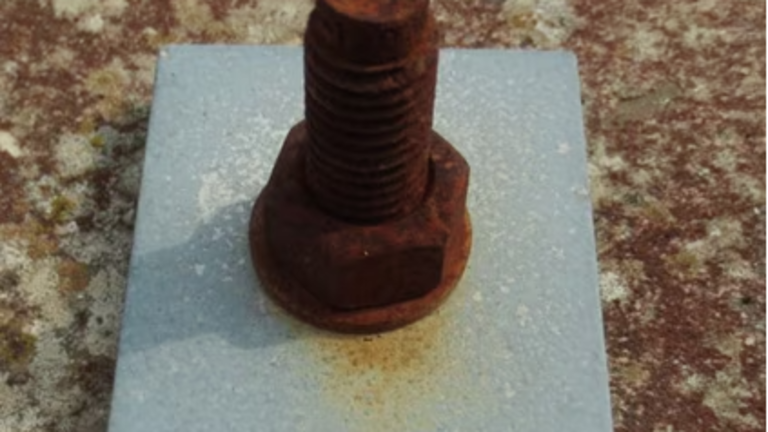
Figure 2 This is a typical case of contact corrosion. A zinc-plated carbon steel (washer) and stainless steel (screw and part) were used together. The surface area of the more noble metal 鈥� the stainless steel 鈥� is larger, causing strong corrosion of the washer.
When these factors occur simultaneously, an electrochemical reaction occurs in which the anode is oxidised and dissolves in the electrolyte, leading to the material gradually degrading.
How to prevent galvanic corrosion?
To minimize the risk of galvanic corrosion, the following strategies can be applied:
Select compatible metal combinations"One of the most effective ways to prevent galvanic corrosion is to avoid combinations of metals with a large difference in electrochemical potential (nobleness). A rule of thumb is to use metals from the same group in the galvanic series or to make sure that the anodic metal has a large enough surface area compared to the cathodic.
Use insulators "By using plastic washers, coatings or other insulating materials, direct electrical contact between the metals can be prevented, which breaks the electrical circuit and stops the galvanic process.
Protective coatings 鈥� Protective coatings such as zinc (galvanisation), epoxy or varnish can isolate the metals from the electrolyte and thus reduce the risk of galvanic corrosion.
Check the electrolyte "Minimising the presence of the electrolyte, for example by using dehumidifiers in indoor environments or using water-dissipating structures, can greatly reduce the risk of galvanic corrosion.
Use sacrificial anodes "In some cases, sacrificial anodes can be used to deliberately direct corrosion to a less important component that can be replaced if necessary.

Figure 3. Conditions for metal combinations without risk of galvanic corrosion
Galvanic corrosion can occur in many different environments, but some common examples are outdoor environments, industries and bathhouses. In the construction sector, corrosion can occur, for example, if stainless steel is used in combination with galvanised fasteners in a humid environment, which leads to the rapid degradation of the galvanised parts. Even in infrastructure, where different metals are combined, galvanic corrosion can occur if the right protective measures are not taken.
What should you think about when choosing materials?
When choosing a fastener or another steel product, it is important to take into account which steel components come into contact with each other, what their nobility is and how much mass/surface each component constitutes. If you choose the same or equivalent materials from a noble perspective, there is simply no significant galvanic corrosion. But cases where you have to combine materials with different nobility arise, and then one way can be to separate the materials with some form of insulation, such as a plastic tray. Another significant factor is how much mass/area each material constitutes. For example, you can often combine a stainless steel fastening with, for example, a railing or other steel profile in hot-dip galvanized sheeting.
The small mass that the attachment constitutes will then not have any significant impact on the larger construction. The galvanic effect will simply be spread out in the larger part of the building. This combination is relatively common as a fastening normally does not have as thick a layer of zinc as a railing or a pillar (see the article "Corrosion - Selection of zinc plated product"). Below you can see our recommendations when it comes to the combination of attachment and a larger attached part.

4. Table showing material combinations and the impact on the lifetime of a fastener from galvanic corrosion
In conclusion, galvanic corrosion is a challenge in many industrial and construction applications. By understanding the basic mechanisms behind this type of corrosion and by taking preventive measures, the life of materials can be extended and maintenance costs reduced. The right choice of materials, insulation of metals and anti-corrosion coatings are crucial factors in minimizing galvanic corrosion and ensuring long-term performance in structures.
The 海角社区 provides further insight into the subject of corrosion. You can also contact our engineers at the Technical Centre who are ready to support you with whatever you need help with.